A baby doesn't need a mountain of toys — they need the right toy for the skill they're building right now. This guide is organized by stage, each pick tied to the skill it grows.
0–3 months: vision and attention
Newborn vision reads high contrast before colors. - A black & white cloth book: bold patterns that grab gaze and build focus — genuinely a "first brain book". - Your face: the best toy ever for this age. Come 20–30 cm close and talk.
3–6 months: body discovery and cause-effect
- Wrist rattles & foot finders: moving a hand makes a sound → they learn their movement causes things. Their first physics lesson 😄
- The hanging stroller toy: visual tracking and reaching.
6–9 months: sitting and two-handed play
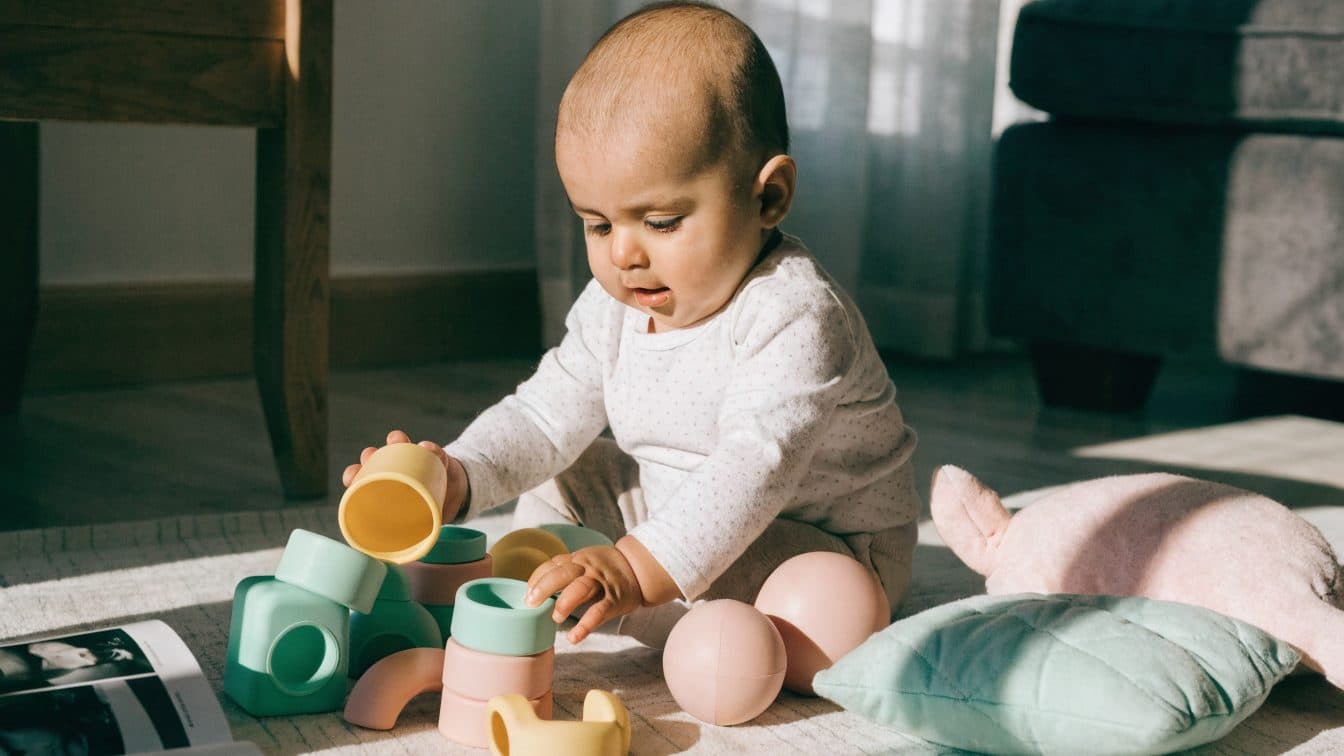
- Silicone stacking cups: stacking, nesting, hand-to-hand transfer — one toy covering half this stage's skills, and chew-safe.
- The sit-and-play elephant: encourages independent sitting with front-facing stimulation.
9–12 months: problem-solving and motion
- The SpinAgain tower: pieces spin as they drop — advanced cause-effect and hand-eye coordination.
- Stacking cubes: building and knocking down (demolition is a skill too!) with graded sizes.
- The Montessori activity cube: five busy faces for curious fingers.
The golden rule: "fewer, visible, rotating"
- Fewer: only 4–6 toys out. Abundance scatters attention and bores faster.
- Visible: within reach on the floor, not locked in a box.
- Rotating: swap the set weekly — a "stored" toy returns brand-new in their eyes, like free new toys.
💛 Most of these are from Mumzworld — code Life9 saves you at checkout.
FAQ
Are light-up electronic toys better? Usually the opposite — a toy that "does everything" makes the child a spectator. The simple toy that needs their hands and brain builds more.
How much daily play does a baby need? Short scattered sessions (5–15 minutes) beat one long one. Follow your baby's cues — when they look away, they've had enough stimulation.
When should I worry about how my baby plays? If they don't reach for toys by 6 months, or don't exchange eye contact during play, mention it at the next pediatric visit.
⚕️ Note: This content is general education and doesn't replace your pediatrician's advice. Every child is different.