- Part 1New Mom's First 40 Days: A Gentle Day-by-Day Guide
- Part 2Baby Milestones from 0 to 3 Months: What to Expect
- Part 3When Do Babies Start Sitting? The Age and Signs to Know
- Part 4When Do Babies Start Eating? A Guide to Starting Solids at 6 Months
- 5Part 5When Do Babies Start Crawling? A Guide to Movement and Encouraging Your BabyYou are here
- 6Part 6Standing and First Steps: Your Baby's Journey to Walking
- 7Part 7Speech and Language Development: From Babbling to the First Word
- 8Part 8From One to Two Years: Your Child's Growth Toward Independence
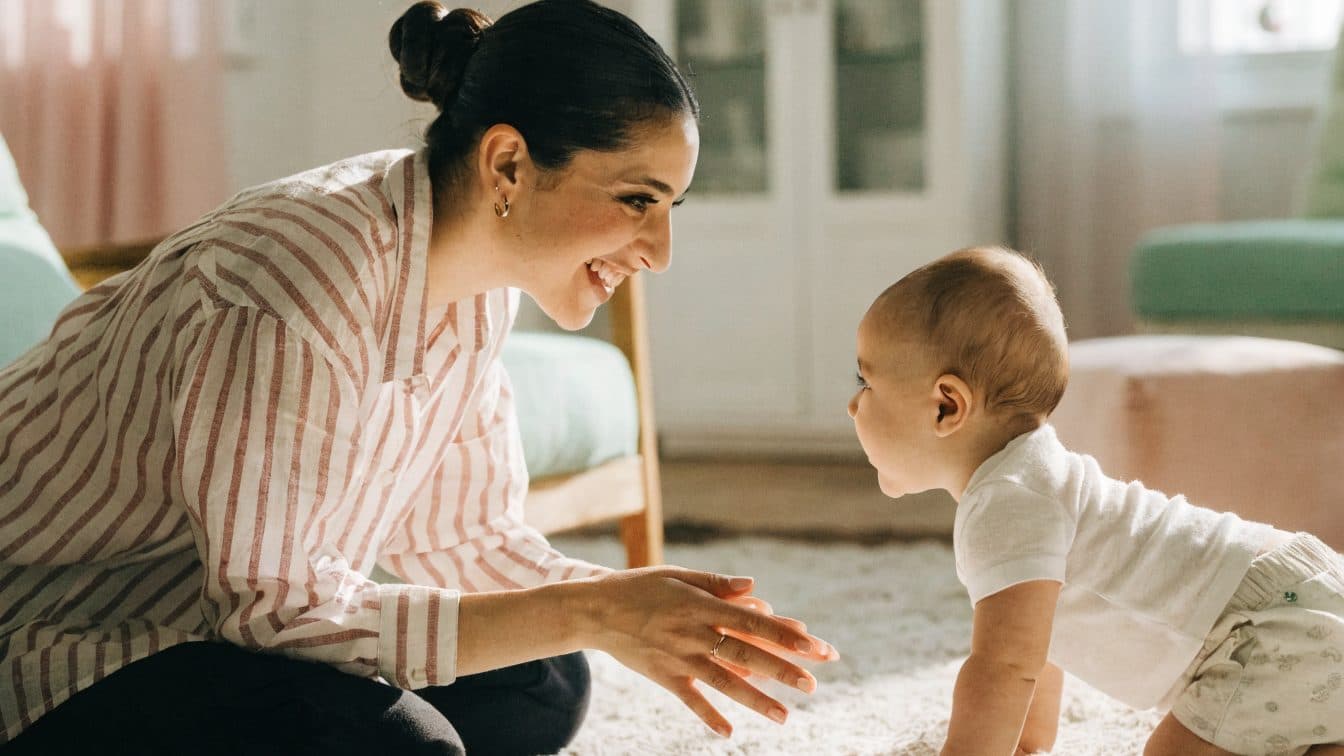
Suddenly your baby is mobile! Crawling is a big leap — from a baby who sits in place to a little explorer chasing everything 😄 In this article we reassure you: when crawling starts, its different forms, and how to encourage it safely.
This is the fifth article in the Mom's Journey: From Birth to Two Years series. In the previous article we talked about starting solids — and now your baby is gaining the strength that helps them move.
When do babies usually start crawling?
Most babies start crawling between 6 and 10 months, but the range is very wide and normal. Some crawl early, some are late, and some skip crawling entirely and go straight to pulling up and walking — and that doesn't mean there's a problem.
What matters isn't the exact date, but that your baby is progressing in gaining movement and strength gradually.
Types of crawling — all normal
There's no single "right" way to crawl, and every baby invents their own:
- Belly crawling (commando) — dragging themselves with their arms.
- Classic crawl — on hands and knees.
- Crawling backward before forward — very common.
- Bottom-scooting or rolling to reach their goal.
All of these are fine as long as they use both sides of their body equally.
Signs your baby is ready to crawl
- Sits steadily without support.
- Pushes their chest up with their arms during tummy time.
- Rocks back and forth on their hands and knees.
- Reaches for distant toys and tries to get to them.
How to encourage your baby to crawl
- Daily tummy time — the most important exercise to strengthen the neck, shoulders, and arms.
- Place a favourite toy a short distance in front of them to reach for.
- Get down on the floor with them and cheer — your presence motivates them.
- Provide a safe, padded space to move freely (avoid leaving them long in a bouncer or walker).
Baby-proof your home for exploration 🏠
Once they're mobile, securing the home becomes essential:
- Outlet covers and keeping cords out of reach.
- Protect sharp table corners and anchor tip-over furniture.
- Safety gates on stairs and kitchen doors.
- Move toxic substances, medicines, and cleaning products out of reach.
- Remove small objects they might swallow (choking hazard).
The golden rule: get down to floor level and see the home through your baby's eyes.
An approximate movement timeline
| Age | Motor skill |
|---|---|
| 6–7 months | Sits supported then steadily, pushes up with arms |
| 8–9 months | Begins crawling/scooting, rocks on knees |
| 10–12 months | Crawls confidently, pulls up to stand |
Remember: the timeline is approximate and every baby has their own rhythm. The overall direction of progress matters more than the exact age.
When to see the doctor
- Not sitting steadily at all by 9 months.
- Uses only one side of their body to move.
- No attempt to move or bear weight on the legs by 12 months.
- Loss of skills they had previously gained.
Products that encourage movement 🛍️
All from stores that ship to Saudi Arabia and the Gulf:
- Mamas & Papas sit-and-play — supports the sitting-and-floor-play stage before crawling.
- Taf Toys black & white Savannah book — place it in front during tummy time to motivate reaching and crawling.
- Wrist rattles & foot finders — build your baby's awareness of their hands and feet and encourage movement.
- HelloBaby video monitor — keeps an eye on your now-mobile baby in every room.
💛 Use code Life9 at Mumzworld on your baby's essentials — all my codes are on the discount codes page.
FAQ
My baby skipped crawling and stood straight up — is that normal?
Yes, some babies never crawl and go straight to standing and walking. As long as they move and explore in other ways and use both sides of their body, there's no need to worry.
My baby only crawls backward — what do I do?
Perfectly normal at first — pushing backward is easier. They'll learn forward soon. Place a toy in front to motivate them to move ahead.
Does a walker help crawling or walking?
The sit-in walker is not recommended (it delays muscle development and carries injury risk). Free floor play is better. Push toys they stand behind are useful later on.
When should I put shoes on them?
During the crawling stage they don't need shoes — bare feet are best to strengthen the muscles and balance. Shoes come with walking outdoors.
---
⚕️ Note: This content is educational only and is not a substitute for medical advice. Every child is different — if you have any concern about your baby's movement or development, see your pediatrician.
Next in the series: Standing and first steps: how to accompany your baby on their journey to walking? (coming soon 💚)