- Part 1New Mom's First 40 Days: A Gentle Day-by-Day Guide
- Part 2Baby Milestones from 0 to 3 Months: What to Expect
- Part 3When Do Babies Start Sitting? The Age and Signs to Know
- Part 4When Do Babies Start Eating? A Guide to Starting Solids at 6 Months
- Part 5When Do Babies Start Crawling? A Guide to Movement and Encouraging Your Baby
- Part 6Standing and First Steps: Your Baby's Journey to Walking
- 7Part 7Speech and Language Development: From Babbling to the First WordYou are here
- 8Part 8From One to Two Years: Your Child's Growth Toward Independence
Before your baby says their first word, they've traveled a long language journey: gazes, smiles, babbling, and gestures. Speech doesn't start suddenly — you build it with them every day through talking and reading 💛 In this article we simplify the language stages and how to grow them.
This is the seventh article in the Mom's Journey: From Birth to Two Years series. In the previous article we talked about standing and first steps — and today we move from motion to words.
Understanding always comes before speaking
An important reassuring point: your baby understands far more than they say. Long before they say "mama," they've understood their name, the word "no," and simple commands. Receptive language (understanding) precedes expressive language (speaking) — so don't measure their development by word count alone.
Month-by-month language milestones
- 0–3 months: cries in different tones, calms to your voice, starts "ah/oh" sounds.
- 4–6 months: babbles and laughs, experiments with varied tones and sounds.
- 7–12 months: repetitive babbling "bababa/mamama," understands "no" and their name, points and waves.
- 12–18 months: first meaningful words (mama, dada, this), follows simple commands.
- 18–24 months: a language explosion — vocabulary expands fast, begins combining two words ("daddy gone").
How to grow your baby's speech — simple daily activities
- Talk to them all day — narrate what you do: "now we change the diaper," "this is a red apple."
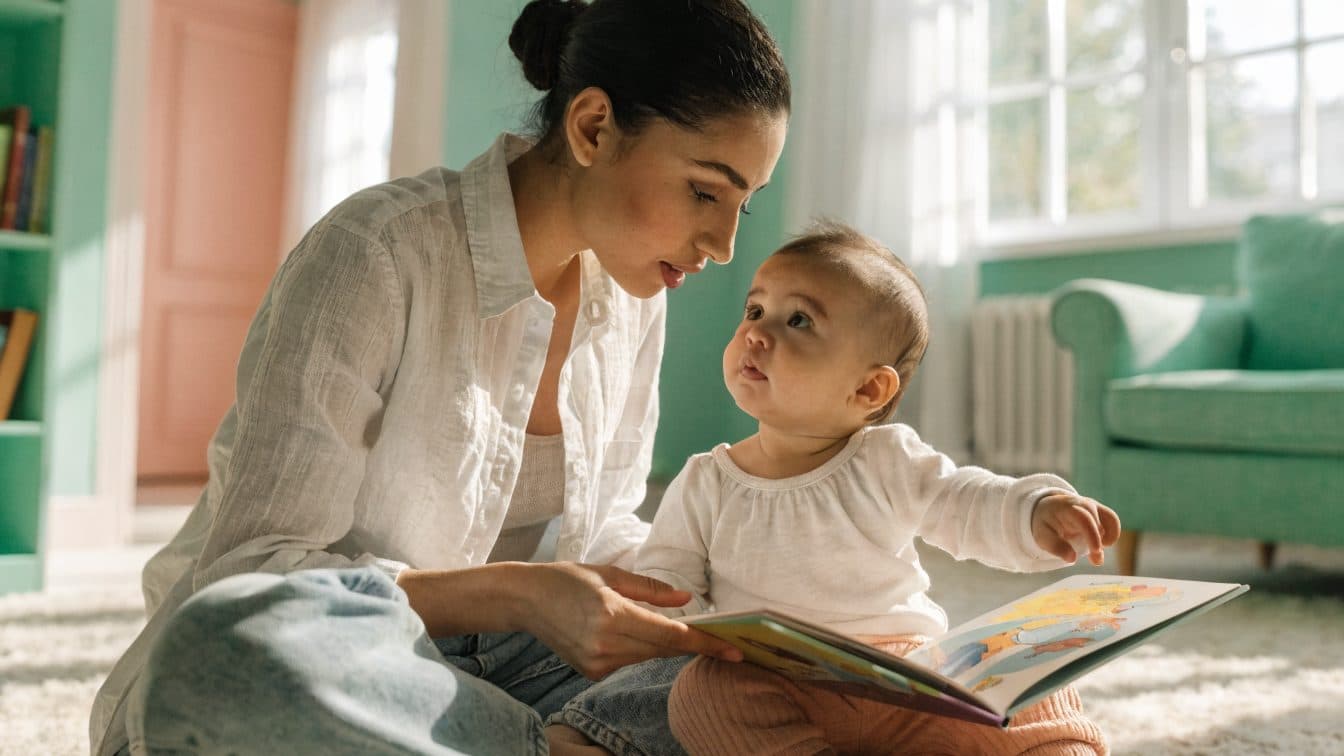
- Read to them daily — even before they understand; reading builds vocabulary and a love of words.
- Imitate their sounds and wait for their reply — this teaches conversational turn-taking.
- Name the things they point to instead of handing them over immediately.
- Sing rhymes with repetition and rhythm — they cement words.
- Limit screen time — language is built through human interaction, not video.
Bilingual? Don't worry
If you speak two languages at home, your baby absorbs both naturally. They may mix them temporarily or start speaking slightly later, but that's not a delay — it's a linguistic richness that benefits them for life.
An approximate language timeline
| Age | Language signs |
|---|---|
| 6 months | Babbles, laughs, turns to sound |
| 9–12 months | "dada/mama" without intent, understands "no," points |
| 12–18 months | First meaningful words, follows simple commands |
| 18–24 months | Vocabulary expands, combines two words |
Remember: the timeline is approximate. Interaction and response (looking, pointing, turning) matter no less than the number of words.
When to see the doctor
- No babbling at all after 9 months.
- No response to their name or to sounds (may warrant a hearing check).
- No pointing or waving after 12 months.
- No meaningful words at all after 16–18 months.
- Loss of words or communication skills they had.
A hearing check is the first step with any language concern — early intervention is very effective.
Products that grow your baby's language 🛍️
All from stores that ship to Saudi Arabia and the Gulf:
- Taf Toys black & white Savannah book — your baby's first book; early reading builds vocabulary and love of language.
- Mamas & Papas interactive sit-and-play — sounds and activities that encourage listening and imitation.
- Classic World stacking cubes — name the colours and shapes during play to build vocabulary.
- Fat Brain Spin Again — a turn-taking toy that reinforces the "your turn, my turn" of conversation.
💛 Use code Life9 at Mumzworld on your baby's toys and books — all my codes are on the discount codes page.
FAQ
My baby is one and says no words — should I worry?
First meaningful words can come as late as 16–18 months. What matters most at this age is that they babble, point, wave, and respond to their name. If these signs are missing, see the doctor and request a hearing check.
Do screens teach language?
No. Studies confirm language is built through direct human interaction, and screens may delay it at this age. Talking, reading, and singing face-to-face are best.
My baby understands everything but doesn't talk much?
Understanding always precedes speaking, and that's a good sign. Keep talking, reading, and naming things. If the speaking gap remains large after 18 months, mention it to your doctor.
Does bilingualism delay speech?
No. Bilingual children develop within the normal range and may only mix the two languages temporarily. Bilingualism is an advantage, not a delay.
---
⚕️ Note: This content is educational only and is not a substitute for medical advice. Every child is different — if you have any concern about your baby's hearing or speech, see your pediatrician; early intervention makes a big difference.
Next in the series: From one to two years: your child's growth toward independence (coming soon 💚)